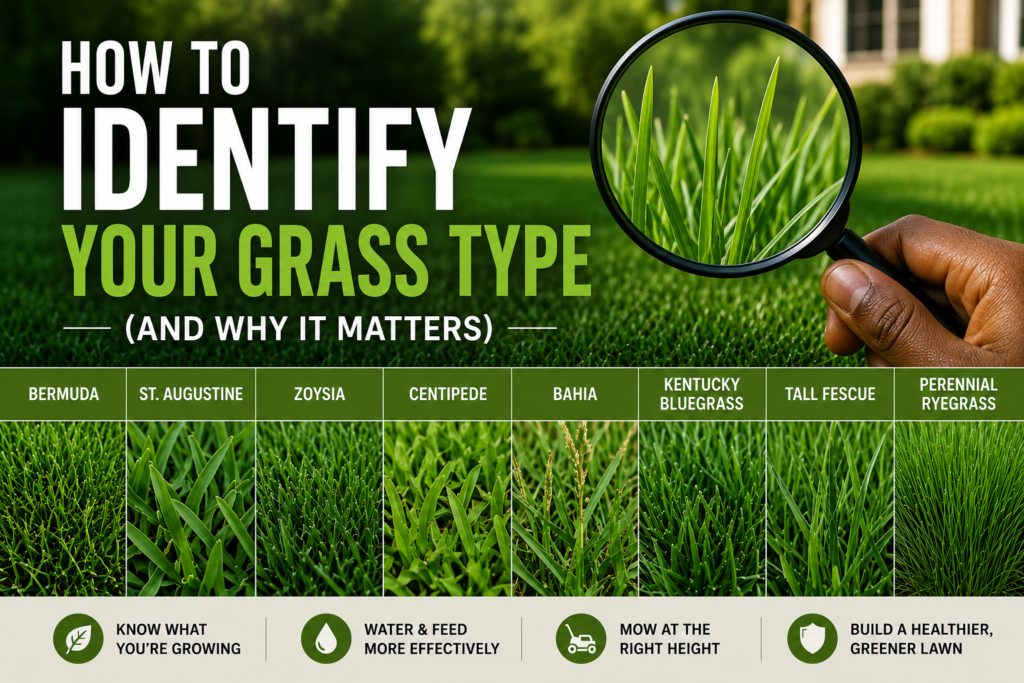
 If you’ve ever wondered why your neighbor’s lawn stays thick and green while yours struggles despite using the same fertilizer, the answer may be simpler than you think—you may not know what type of grass you’re growing.
Every grass variety has different watering needs, mowing heights, fertilizer requirements, and growing seasons. Treating all lawns the same is one of the biggest mistakes homeowners make.
In this guide, you’ll learn how to identify your grass type, understand why it matters, and discover how knowing your lawn can help you achieve healthier, greener grass year-round.
Why Knowing Your Grass Type Matters
Your lawn care routine should be built around the grass you have—not the grass you wish you had.
Knowing your grass type helps you:
- Choose the right fertilizer
- Water more efficiently
- Mow at the correct height
- Prevent unnecessary stress
- Improve disease resistance
- Control weeds more effectively
A healthy lawn starts with understanding what you’re growing.
Warm-Season vs. Cool-Season Grasses
The easiest way to begin identifying your lawn is by determining whether it’s a warm-season or cool-season grass.
Warm-Season Grasses
Warm-season grasses thrive during the hottest months of the year.
They:
- Grow fastest in late spring and summer
- Slow down or go dormant during winter
- Require less water once established
- Love full sunlight
Common warm-season grasses include:
- Bermuda
- St. Augustine
- Zoysia
- Centipede
- Bahia
These are the most common lawns throughout the southern United States.
Cool-Season Grasses
Cool-season grasses perform best during spring and fall.
They:
- Stay green longer into winter
- Grow rapidly in cooler temperatures
- Prefer milder summers
- Often require more irrigation during hot weather
Popular cool-season grasses include:
- Kentucky Bluegrass
- Tall Fescue
- Fine Fescue
- Perennial Ryegrass
These varieties dominate much of the northern United States.
How to Identify Common Grass Types
Bermuda Grass
Bermuda is one of the toughest and fastest-growing lawn grasses available.
Characteristics
- Fine, narrow blades
- Medium to dark green
- Dense appearance
- Spreads aggressively through runners
- Excellent drought tolerance
Best for:
- Sunny lawns
- Heavy foot traffic
- Sports fields
St. Augustine Grass
St. Augustine is known for its thick, carpet-like appearance.
Characteristics
- Wide blades
- Bright green color
- Thick, lush growth
- Spreads through above-ground runners
- Excellent heat tolerance
Best for:
- Coastal climates
- Partial shade
- Home landscapes
Zoysia Grass
Zoysia combines beauty with durability.
Characteristics
- Medium blade width
- Dense texture
- Slow-growing
- Excellent weed resistance
- Soft underfoot
Best for:
- Residential lawns
- Warm climates
- Moderate traffic
Centipede Grass
Often called the “lazy man’s grass,” Centipede requires relatively little maintenance.
Characteristics
- Light green color
- Medium-width blades
- Slow growth
- Low fertilizer needs
- Moderate drought tolerance
Best for:
- Homeowners wanting low-maintenance lawns
Bahia Grass
Bahia grass is valued for surviving difficult conditions.
Characteristics
- Coarse blades
- Deep root system
- Excellent drought tolerance
- Produces noticeable seed heads
- Requires minimal maintenance
Best for:
- Large properties
- Sandy soils
- Rural landscapes
Kentucky Bluegrass
Kentucky Bluegrass creates the classic northern lawn.
Characteristics
- Dark green color
- Fine blades
- Dense appearance
- Self-repairs through underground rhizomes
Best for:
- Cooler climates
- Decorative lawns
Tall Fescue
Tall Fescue has become one of the most popular cool-season grasses.
Characteristics
- Wider blades
- Deep roots
- Excellent drought tolerance
- Handles foot traffic well
Best for:
- Transitional climates
- Busy families
Perennial Ryegrass
Known for quick germination and vibrant color.
Characteristics
- Fine blades
- Rich green appearance
- Fast establishment
- Often mixed with other grasses
Best for:
- Overseeding
- Quick lawn repairs
Five Ways to Identify Your Grass
1. Look at the Blade Width
The width of each blade offers your first clue.
Fine blades usually indicate:
- Bermuda
- Kentucky Bluegrass
- Ryegrass
Wide blades often indicate:
- St. Augustine
- Tall Fescue
2. Check How It Spreads
Some grasses spread using runners.
If you notice stems creeping across the soil surface, your lawn may be:
- Bermuda
- St. Augustine
- Zoysia
Grasses that grow in bunches instead include:
- Tall Fescue
- Ryegrass
3. Observe the Color
Different grasses naturally have different shades.
Examples include:
- Bright green: St. Augustine
- Medium green: Bermuda
- Dark green: Kentucky Bluegrass
- Light green: Centipede
Color alone won’t identify a lawn, but it helps narrow the possibilities.
4. Notice Where It Grows Best
Think about your yard.
Does it receive:
- Full sun?
- Partial shade?
- Heavy foot traffic?
- Sandy soil?
Different grasses excel under different conditions.
5. Watch How It Changes Throughout the Year
Seasonal growth can reveal a lot.
If your lawn turns brown during winter but greens up quickly in spring, it’s likely a warm-season grass.
If it stays green well into fall and grows rapidly during cool weather, it’s probably a cool-season variety.
Common Grass Identification Mistakes
Many homeowners accidentally identify weeds instead of their actual lawn.
Other common mistakes include:
- Assuming all southern lawns are Bermuda
- Judging solely by color
- Ignoring mowing height
- Confusing dormant grass with dead grass
When in doubt, examine several areas of your lawn instead of relying on one small patch.
What to Do After You Identify Your Grass Type
Once you’ve identified your lawn, you can tailor every aspect of your maintenance routine.
Fertilizer
Different grasses require different nutrient schedules and application rates.
Watering
Some grasses thrive with deep, infrequent watering, while others need more consistent moisture.
Mowing
Proper mowing height promotes stronger roots and naturally suppresses weeds.
Weed Control
Certain herbicides are safe for some grass types but can damage others.
Seasonal Care
Understanding your grass type helps you know exactly when to fertilize, aerate, overseed, or apply pre-emergent weed control.
Final Thoughts
One of the smartest things you can do for your lawn is learn exactly what type of grass you’re growing. It takes the guesswork out of lawn care and helps you make better decisions throughout the year.
Whether your lawn is Bermuda, St. Augustine, Zoysia, Centipede, Bahia, Kentucky Bluegrass, Tall Fescue, or Ryegrass, giving it the care designed for that specific variety will lead to healthier growth, fewer weeds, and a greener yard.
At LawnSizzle, we believe every great lawn starts with knowledge. Once you identify your grass type, you’ll be well on your way to creating the lush, vibrant lawn you’ve always wanted.