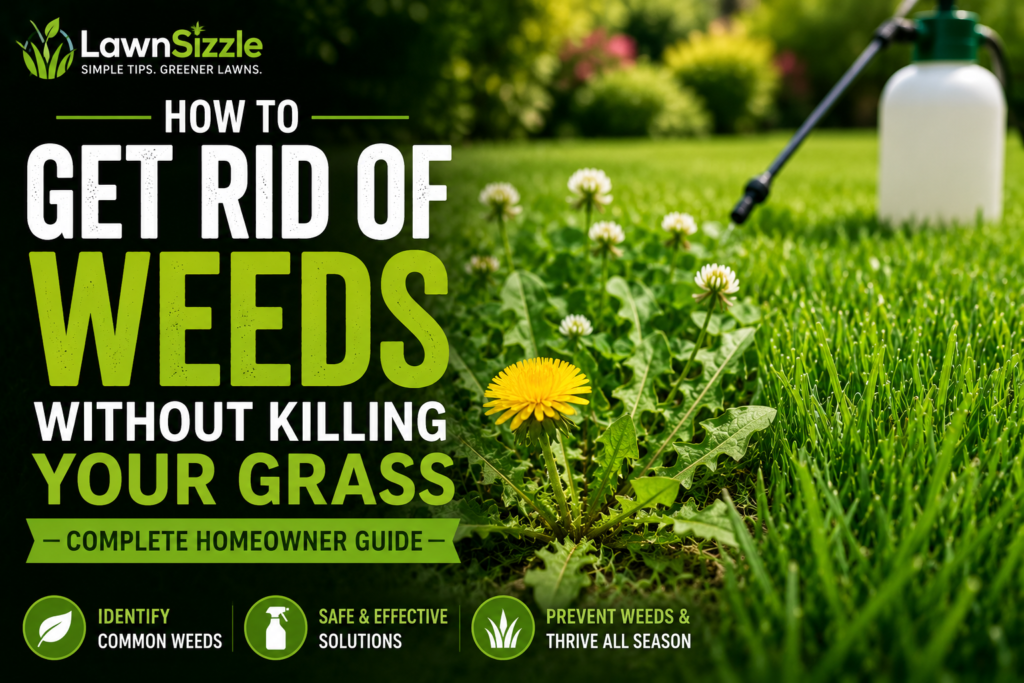
 How to Get Rid of Weeds Without Killing Your Grass (2026 Guide)
This is a tricky one, so you have to be intentional and careful about how you move. Nothing ruins the look of a beautiful lawn faster than weeds. One week your grass looks healthy, and the next you’re staring at patches of crabgrass, dandelions, clover, or other unwanted plants taking over your yard.
The good news? You don’t have to destroy your lawn to eliminate weeds. With the right strategy, you can kill unwanted weeds while keeping your grass healthy, green, and thriving.
In this guide, you’ll learn why weeds appear, how to identify the most common lawn weeds, and the safest methods to remove them without harming your lawn.
Why Do Weeds Grow in Lawns?
Weeds don’t usually appear because your lawn is “bad.” They thrive whenever they find an opportunity.
Some of the most common reasons weeds invade include:
- Thin or bare patches of grass
- Poor mowing habits
- Overwatering or underwatering
- Compacted soil
- Poor soil nutrition
- Lack of pre-emergent weed prevention
Think of weeds as nature’s way of filling empty space. The thicker and healthier your lawn becomes, the fewer opportunities weeds have to establish themselves.
Step 1: Identify the Weed
Before spraying anything, identify the type of weed you’re dealing with. Different weeds require different treatments.
Crabgrass
Crabgrass is an annual grassy weed that spreads rapidly during the summer.
Signs include:
- Wide blades
- Low-growing growth pattern
- Appears during warm weather
- Forms thick clumps
The best way to fight crabgrass is prevention using a spring pre-emergent herbicide before seeds germinate.
Dandelions
Perhaps the most recognizable lawn weed.
Characteristics:
- Bright yellow flowers
- Deep taproot
- Large jagged leaves
- White seed heads
Dandelions are broadleaf weeds and are relatively easy to control with selective herbicides or manual removal.
Clover
White clover often appears when lawns are low in nitrogen.
It features:
- Three rounded leaves
- Small white flowers
- Dense spreading patches
Improving lawn fertility often helps reduce clover naturally.
Nutsedge
Many homeowners mistake nutsedge for grass.
Look for:
- Bright lime-green color
- Faster growth than surrounding grass
- Triangular stems
Nutsedge requires specialized herbicides because standard weed killers are usually ineffective.
Chickweed
A cool-season broadleaf weed that spreads quickly in spring and fall.
Characteristics include:
- Small white flowers
- Low-growing stems
- Dense mats across the lawn
Step 2: Choose the Right Weed Control Method
There are two primary ways to eliminate weeds.
Option 1: Pull Them by Hand
Hand-pulling works well for:
- Small infestations
- Dandelions
- Young weeds
- Newly established lawns
The key is removing the entire root system.
Pull weeds after rain or watering when the soil is soft.
Option 2: Use a Selective Herbicide
Selective herbicides kill weeds while leaving healthy grass largely unaffected when used according to the label.
These products are ideal for:
- Large weed infestations
- Broadleaf weeds
- Established lawns
Always choose a product labeled for your specific grass type.
Warm-season grasses and cool-season grasses often have different herbicide recommendations. For my St. Augustine lawn, I apply Scotts Bonus S triple action around late March/early April once it starts to warm up and you can see the grass starting to green up again. Wait two weeks afte the first application, and reassess.
Understanding Pre-Emergent vs. Post-Emergent Weed Control
Many homeowners confuse these two products.
Pre-Emergent Herbicides
Pre-emergents stop weed seeds from sprouting.
They’re best used:
- Early spring
- Before crabgrass germinates
- As a preventative measure
Important: They do not kill existing weeds.
Post-Emergent Herbicides
Post-emergents kill weeds that are already growing. MSM Turf or Fahrenheit herbicides shine here. Just make sure that you have a handheld or backpack sprayer, depending on your lawn size.
They’re ideal when:
- Weeds are visible
- Spot treatments are needed
- Broadleaf weeds have emerged
Most homeowners benefit from using both products during different times of the year.
How to Apply Weed Killer Safely
Follow these best practices to protect your lawn.
Read the Label
Always follow the manufacturer’s instructions.
Using more product doesn’t improve results—it can damage your grass.
Apply During Calm Weather
Avoid windy days.
Wind can carry herbicides onto flowers, gardens, shrubs, or neighboring lawns.
Don’t Spray Before Heavy Rain
Rain can wash herbicides away before they have time to work.
Choose a dry day whenever possible.
Avoid Extreme Heat
Many herbicides work best between 60°F and 85°F.
Spraying during intense summer heat may stress your lawn.
Natural Ways to Control Weeds
If you prefer reducing chemical use, these methods can help.
Keep Grass Thick
A dense lawn naturally crowds out weeds.
Healthy turf leaves very little room for unwanted plants to grow.
Mow at the Proper Height
Never remove more than one-third of the grass blade at one time.
Taller grass shades the soil and helps prevent weed seeds from germinating.
Fertilize Properly
Healthy grass is your best weed prevention tool.
Feed your lawn according to your grass type and the season.
Water Deeply
Instead of watering every day, water deeply once or twice per week.
Deep roots create stronger grass that can better compete with weeds.
Overseed Thin Areas
Bare patches invite weeds.
Adding fresh grass seed during the appropriate season helps fill empty spaces before weeds can take over.
Common Weed Control Mistakes
Avoid these common homeowner mistakes.
Spraying Every Weed the Same Way
Different weeds require different treatments.
Always identify the weed before choosing a herbicide.
Applying Too Much Product
More isn’t better.
Overapplication can burn grass and waste money.
Ignoring Lawn Health
Weed killers solve symptoms—not the underlying problem.
If your lawn remains thin, weeds will eventually return.
Waiting Too Long
Young weeds are much easier to eliminate than mature plants with established root systems.
Early action saves time and effort.
Frequently Asked Questions
Will weed killer kill my grass?
Selective herbicides are designed to target specific weeds while leaving compatible lawn grasses unharmed when used correctly. Always confirm the product is labeled for your grass species.
What’s the best time to kill weeds?
Spring and fall are generally the most effective seasons because weeds are actively growing while temperatures are moderate.
How long does weed killer take to work?
Many products begin showing visible results within a few days, while complete control can take one to three weeks depending on the weed species and product used.
Can I mow after spraying weeds?
Most products recommend waiting at least two to three days before mowing. Check the product label for specific guidance.
Will weeds come back?
They can.
The best long-term defense is maintaining a thick, healthy lawn through proper mowing, watering, fertilization, and seasonal weed prevention.
Final Thoughts
Getting rid of weeds without damaging your grass isn’t about finding one miracle product—it’s about combining smart lawn care with the right weed control strategy.
Start by identifying the weeds you’re dealing with, choose the appropriate treatment, and focus on building a thick, healthy lawn that naturally resists future weed invasions.
Remember, the healthiest lawns don’t leave much room for weeds to grow. With consistent maintenance and a little patience, you’ll spend less time fighting weeds and more time enjoying a lush, green yard that’s the envy of the neighborhood.